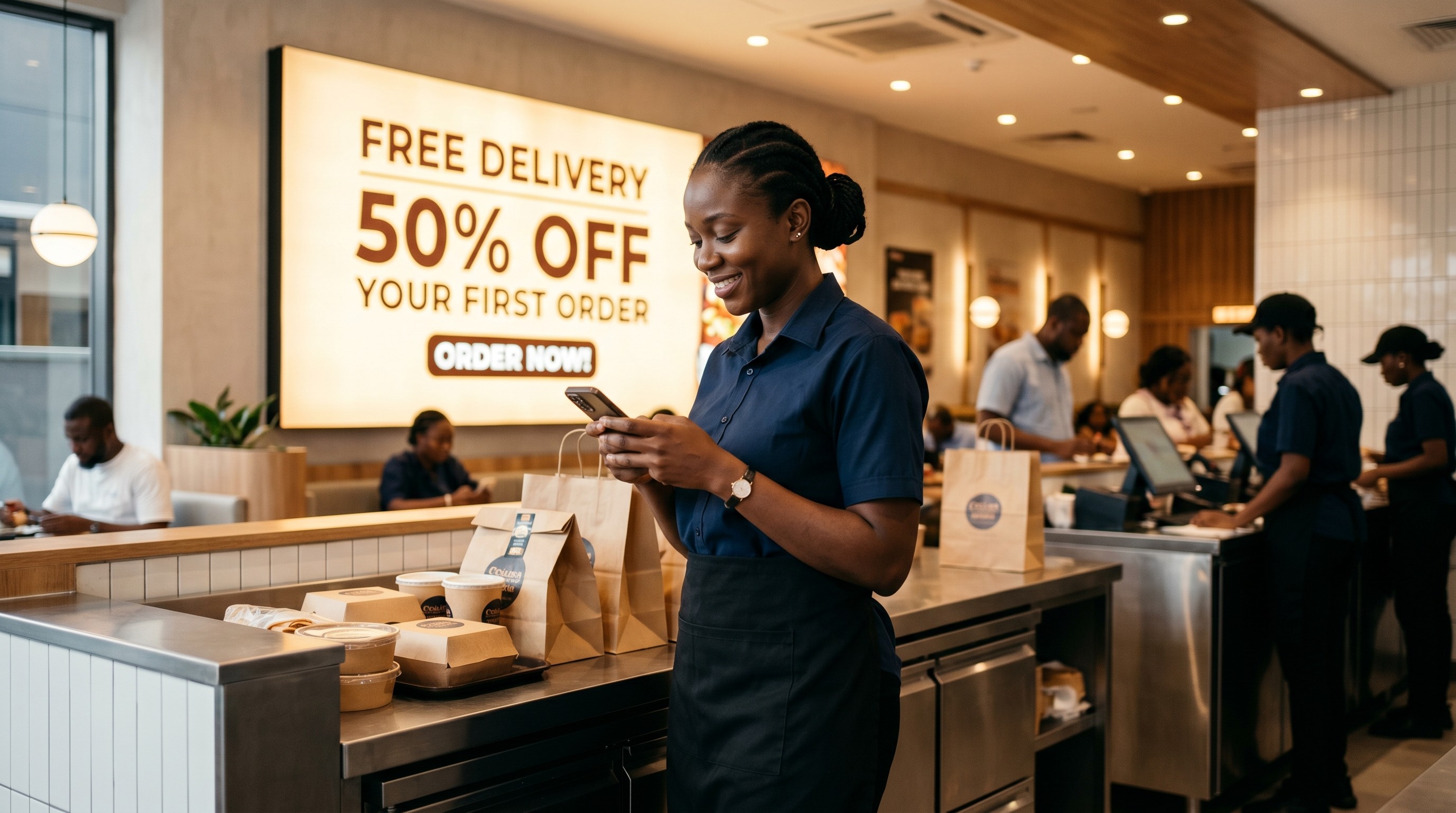
Discounts work. That is the problem. A discount brings customers in, the order numbers go up, the platform looks active, and the founder reads that as evidence that the business is growing. What is actually happening is that the business is paying to acquire customers who came for the price, not the product — and who will leave the moment someone else offers a better deal.
The food delivery customer in Nigeria is already operating inside a market where everything costs more every month. Petrol. Logistics. Packaging. The cost of running a food delivery business is rising consistently, and so is the cost of the food being delivered. Running discounts inside that environment is not a customer acquisition strategy. It is a subsidy. The business is absorbing costs that the customer should be paying, in exchange for an order that does not cover what it cost to fulfil.
The specific pattern is consistent. A food delivery business launches with introductory pricing or a discount code to build volume. Customers arrive. Order numbers look healthy. The business extends the promotion because volume is up and removing the discount feels like a risk. Eventually the promotion becomes the expectation. The customer who signed up for the deal has never paid full price. When the business finally removes the discount — because it has no choice — a portion of those customers leave. The business spent months subsidising customers who were never going to stay at the real price.
The customer a discount attracts is not the customer that builds a business. They came because of the price point, not because of the product, the reliability, or the experience. They have no loyalty to the platform — they have a relationship with the discount. These are the customers most likely to complain when something goes wrong, most likely to leave when a competitor runs a better promotion, and least likely to refer anyone who is not also looking for a deal. Every order fulfilled on a discount is an order the business paid for twice — once in cost of goods and logistics, and once in the reduction it applied to make the price attractive.
The businesses that build sustainable customer bases in food delivery do it through consistency, not price. The customer who orders at full price and receives the right food, on time, in good condition, has a reason to come back that has nothing to do with how much they saved. That customer is harder to acquire and slower to convert. They are also the only customer worth having — because when the promotion ends, they stay.
Every naira spent discounting an order is a naira not spent on the product quality, delivery reliability, or customer experience that would have earned the same customer without the discount. The businesses that learn this early enough survive. The ones that build their entire customer base on promotional pricing eventually face the same problem — and by then, they have no margin left to fix it with.

Copy link